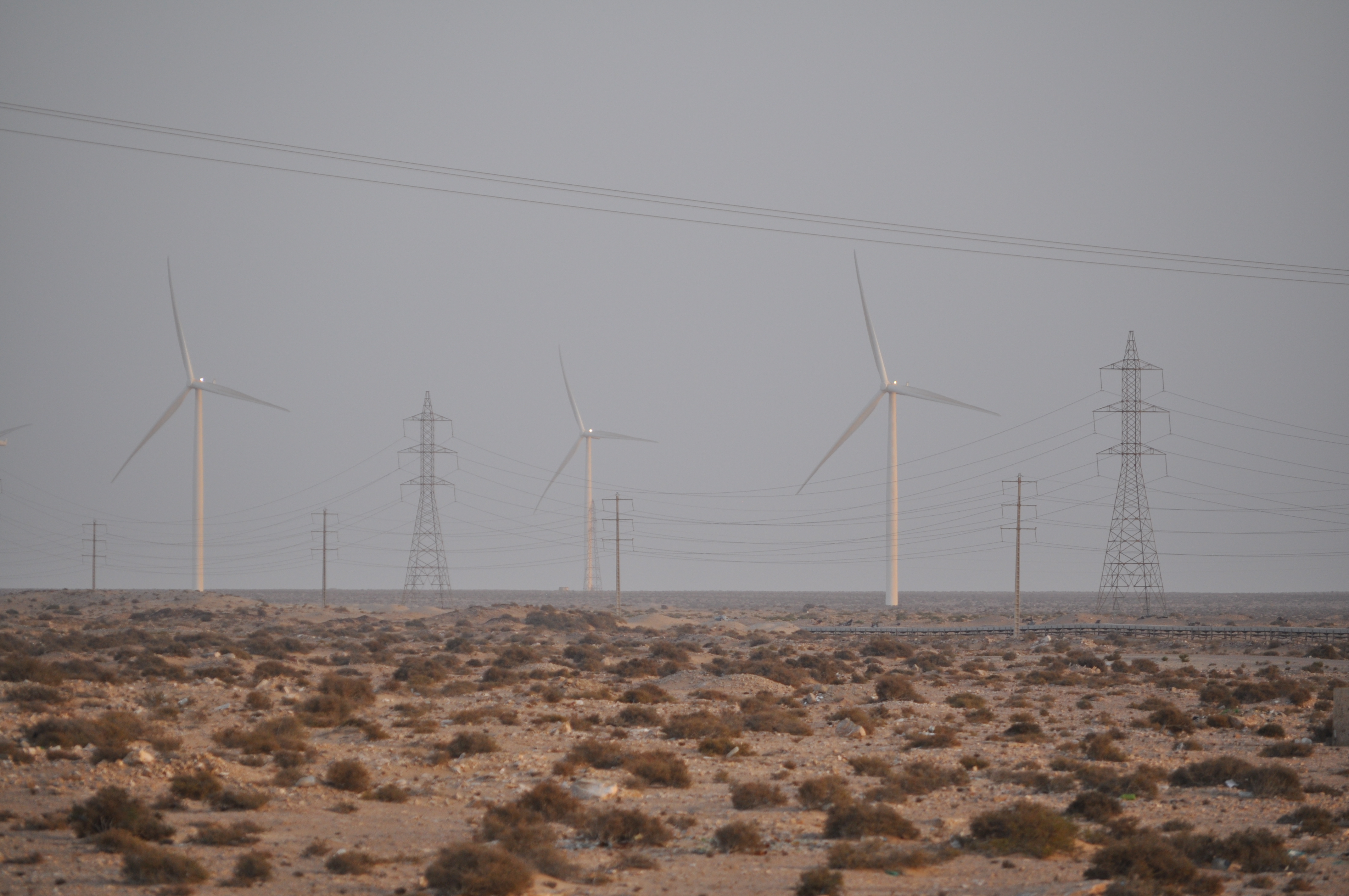
Morocco’s ambitions to become a global green hydrogen powerhouse are accelerating. Yet, Rabat is allocating land in a territory it does not legally own.
On 5 February 2026, Morocco signed a series of land reservation agreements with companies previously selected under its green hydrogen programme known as the “Morocco Offer” - a state-led initiative launched in 2024 to attract large-scale foreign investment in hydrogen and derivative industries through preferential access to land and infrastructure.
In March 2025, five companies or consortia were approved for projects representing a combined projected investment of approximately USD 35 billion:
- The ORNX consortium (Ortus, USA; Acciona, Spain; Nordex, Germany);
- TAQA (UAE) and Moeve (Spain);
- ACWA Power (Saudi Arabia);
- United Energy Group (China) and China Three Gorges (China);
- Nareva (Morocco).
Media reports suggest that all selected investors have signed land agreements, but do not specify the precise location of all allocated plots.
Land in a non-self-governing territory
Western Sahara Resource Watch (WSRW) can confirm that at least two of the land agreements relate to occupied Western Sahara: TAQA-Moeve was accorded land for a project in Dakhla, and ORNX obtained land in El Aaiún.
It is not clear whether the land that has been accorded to the other selected investors is located in the occupied territory. But it is highly likely.
As stipulated in a circular note of March 2024, each project approved under the Morocco Offer may be allocated up to 30,000 hectares. Nearly one million hectares have been identified for hydrogen development, with an initial 300,000 hectares being gradually released. However, a map accompanying the policy shows that a substantial share of this land lies in Western Sahara - a territory recognised by the United Nations as non-self-governing and under Moroccan occupation since 1975.
Western Sahara is separate and distinct from Morocco under international law. As an occupying power, Morocco has no sovereignty over the territory and cannot lawfully dispose of its land or natural resources without the consent of the Saharawi people.
By allocating land in El Aaiún and Dakhla, the Moroccan authorities are granting long-term industrial access to territory over which they have no recognised legal title. These agreements allow companies to proceed with feasibility studies, environmental assessments and permitting - effectively locking in large-scale infrastructure in a non-self-governing territory without the consent of its people.
The projects
WSRW can confirm that the following two investors have been allotted land in occupied Western Sahara:
- TAQA–Moeve signed a land reservation agreement for a project in Dakhla, in occupied Western Sahara. The project will focus on the production of e-fuels and green ammonia. While it is clear that the renewable energy component of the project will be implemented in Dakhla, it is not clear where the downstream conversion into green hydrogen derivatives will take place. More details are available here.
- ORNX obtained land in El Aaiún for what is described as a USD 4.5 billion green ammonia project.The ORNX project in El Aaiún is presented as a fully integrated renewable-powered industrial platform, combining more than 2 GW of wind and solar generation, battery storage systems, approximately 900 MW of electrolysers, and seawater desalination facilities. In its initial phase, the consortium expects to produce around 100,000 tonnes of hydrogen annually, to be converted into approximately 560,000 tonnes of ammonia for domestic and export markets. The project is expected to start with an initial investment of approximately $4.5 billion. Additional ORNX projects are reportedly planned in Boujdour and Dakhla - both located in Western Sahara.
ACWA Power has signed a land reservation agreement for its “Green Pearl” project - allegedly focusing on the production of green steel - however the location has not been publicly disclosed. The company did not issue a press release on the subject.
While media reports suggest that all investors selected in March 2025 have now signed land reservation agreements with the Moroccan government, WSRW has not found explicit corroborating information that this is the case for Nareva and the Chinese consortium.
The Chinese consortium (United Energy Group and China Three Gorges) is expected to focus on green hydrogen-to-ammonia production.
Nareva, owned by the Moroccan monarchy through the holding Al Mada, already operates major wind energy projects in Western Sahara and is involved in large-scale transmission infrastructure linking the occupied territory to Morocco’s national grid. It is also involved in other green hydrogen projects, such as a feasibility study signed in early 2024 with ONEE and GE Vernova to convert a thermal power plant in El Aaiún to run on green hydrogen. Its hydrogen project that has been approved under the Morocco Offer, focuses on green ammonia, synthetic fuels and green steel. Given its ownership structure, Nareva’s activities in Western Sahara form part of a broader state-led strategy to consolidate economic control over the territory.
Silence from investors
WSRW has written to all selected investors seeking clarification regarding project locations and the legal due diligence undertaken in light of Western Sahara’s status. To date, none of the contacted companies has provided substantive responses addressing these concerns.
“It is extraordinary to see multinational companies accepting land from an occupying power that has no legal title to grant it,” says Sara Eyckmans of WSRW. “These projects are not taking place in a legal vacuum. By moving forward without the consent of the Saharawi people, investors are not only exposing themselves to serious legal risk - they are helping to entrench an unlawful occupation.”
Green energy expansion amid repression
Morocco promotes its hydrogen programme as central to decarbonisation and industrial development. In Western Sahara, however, large-scale renewable and green hydrogen projects risk entrenching Morocco’s control by tying the territory’s land and energy potential to long-term export-oriented infrastructure.
In March 2025, eight UN Special Rapporteurs urged Morocco to halt the demolition of Saharawi homes linked to green energy expansion in the territory, citing concerns about repression of Saharawi activists, journalists and human rights defenders.
WSRW reiterates that renewable energy projects are not exempt from international law. Companies involved in green hydrogen and related industries must ensure that they are not participating in the exploitation of land or resources in Western Sahara without the consent of its people.
Since you're here....
WSRW’s work is being read and used more than ever. We work totally independently and to a large extent voluntarily. Our work takes time, dedication and diligence. But we do it because we believe it matters – and we hope you do too. We look for more monthly donors to support our work. If you'd like to contribute to our work – 3€, 5€, 8€ monthly… what you can spare – the future of WSRW would be much more secure. You can set up a monthly donation to WSRW quickly here.
MEPs push back on Commission over Western Sahara in EU–Morocco trade
MEPs from across the political spectrum sharply criticised the European Commission over its handling of EU-Morocco trade relations covering occupied Western Sahara, raising concerns over legality, transparency and an apparent disregard for Parliament’s role.
SRI update
The following overview enlists stock-exchange registered companies with current or recent operations in occupied Western Sahara. Updated 16 April 2026
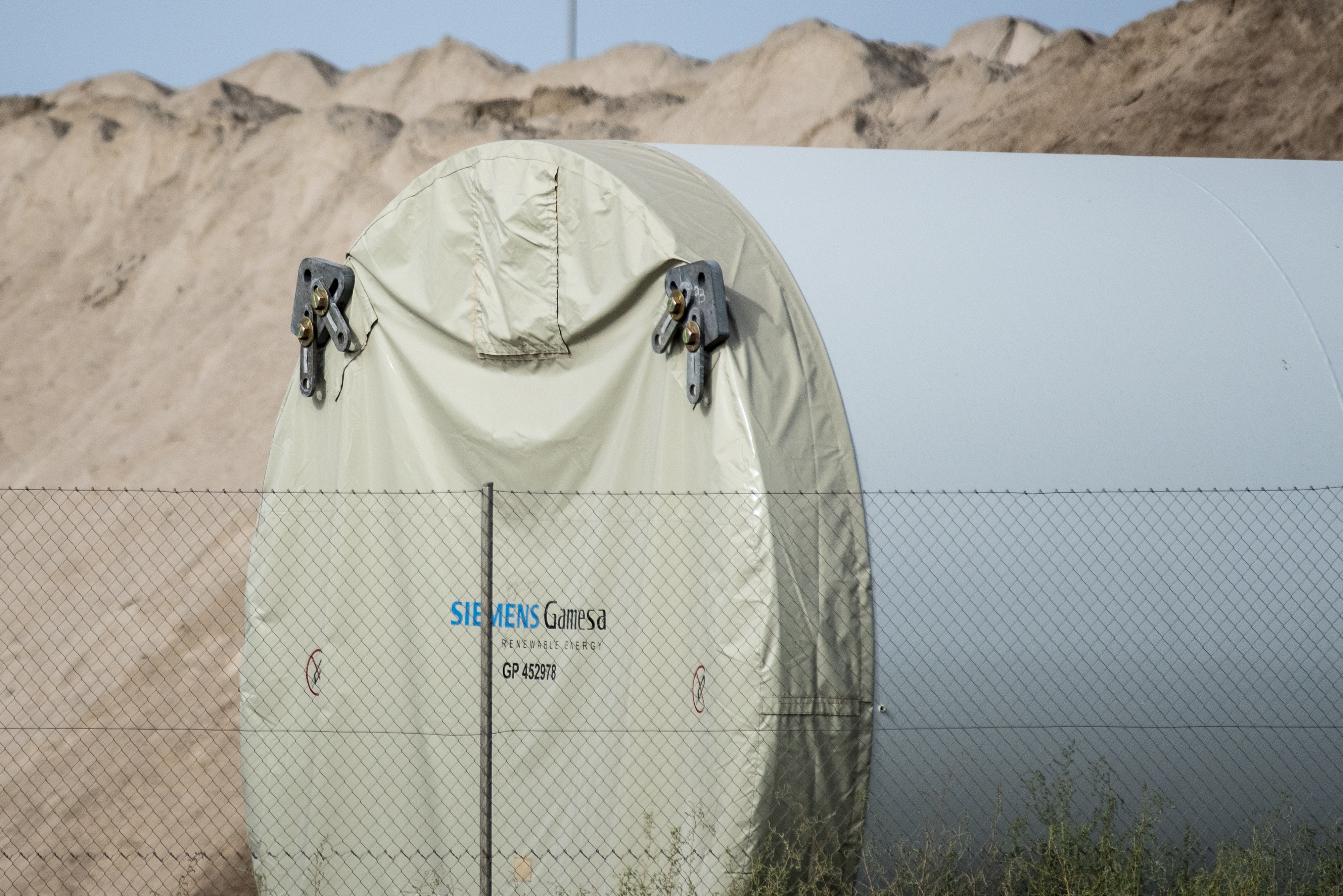
Siemens Energy sidesteps key questions on Western Sahara
At its 2026 Annual General Meeting, Siemens Energy defended its involvement in wind energy projects in occupied Western Sahara.
US eyes minerals in occupied Western Sahara
Seeking to position itself as a key supplier of strategic minerals for Western powers, Morocco has signed a new agreement with the United States that covers Western Sahara’s waters and the critical minerals harboured there.